

The Ultimate Guide to E-Commerce Freight Shipping
Running a thriving online business is an enviable problem to have until your shipping dock becomes overwhelmed. Many rapidly growing brands reach a tipping point when sending individual boxes via ground parcel services becomes less cost-effective and starts to erode margins, requiring a new shipping strategy.
Scaling to e-commerce shipping can feel like a substantial adjustment, especially when moving from parcels to pallets. Your business may shift from flat rates to more seemingly complex factors such as freight class, density and accessorials. While this leap may seem daunting, it often unlocks the next stage of your brand’s growth.
When to Use Freight Shipping Instead of Parcel
To determine whether standard ground services have become more costly and cumbersome, compare your current shipments against these three metrics.
- Weight: The standard cutoff is 150 pounds, so anything above this can cause parcel rates to spike, making less-than-truckload a more cost-effective option.
- Size: Packages exceeding 108 inches in length or 165 inches in length and girth can face “oversized” fees in parcel networks.
- Volume: When shipping 10 or more boxes to a single location, such as a distributor, palletizing them can be safer and less expensive than printing separate labels.
You can identify when to switch shipment methods by analyzing how these factors impact your operations.
Can E-Commerce Businesses Use LTL Shipping?
LTL shipping is the primary growth factor for e-commerce brands that have outgrown parcel services but can’t fill an entire trailer. With this model, you only pay for the space your pallets occupy while sharing the rest of the truck and cost with other shippers.
In B2B e-commerce freight shipping, most deliveries go to warehouses with loading docks. However, you must account for residential limitations when shipping freight directly to consumers, as large trucks require additional planning to maneuver through suburban neighborhoods and driveways.
Comparing Freight Models
Choosing the best freight shipping companies for e-commerce depends on your budget, timeline and volume. Here is how your options stack up.
- LTL: Less-than-truckload is best for shipments between 150 and 15,000 pounds, or approximately one to 12 pallets, and is most common for growing e-commerce brands.
- FTL: Full truckload shipping is ideal for over 12 pallets or higher-volume dedicated runs, and can be faster since it does not stop at terminals.
- Air freight: Offers critical speed, often in one to two days, but can be extremely expensive, typically used only for emergency restocking to prevent shortages.
- Ocean freight: The slower standard for international sourcing and importing from manufacturers, usually taking 30 to 60 days, but provides the lowest cost per unit.
Compare each mode based on your needs to ensure you don’t overpay for speed or lose out on reliability.
How Freight Pricing Works
Unlike parcel shipping, which uses a relatively simple “zone-plus-weight” calculation, freight pricing depends on the difficulty of moving your goods. Familiarizing yourself with these components can help you best predict your e-commerce freight shipping cost.
- Freight class and density: Unlike flat-rate parcels, freight rates rely on density. That means compact items like hardware cost less to ship per pound than lighter but bulkier items, like assembled furniture, since they occupy less space compared to their weight.
- Lane balance: Shippers price routes based on supply and demand, known as “headhaul” and “backhaul.” So, shipping into a higher-demand consumption zone like NYC or LA often costs more than shipping out, as companies charge a premium to enter congested areas where finding a return load is more difficult.
- Accessorials: In e-commerce, there are extra fees for services beyond standard dock-to-dock transportation. These include liftgate services, residential delivery and limited-access fees.
You can avoid surprise costs by optimizing your packaging to increase density and planning for accessorials up front.
How to Ship Pallets for E-Commerce Orders
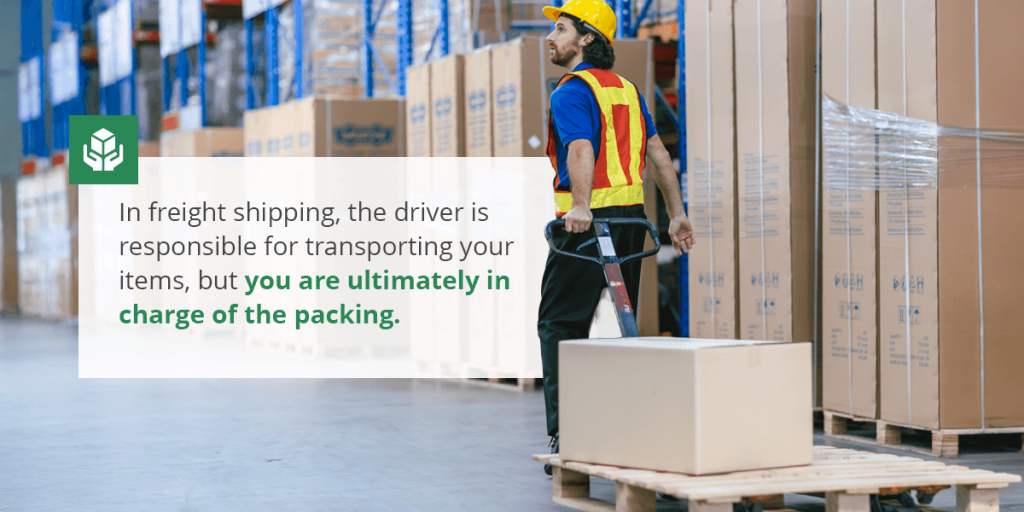
In freight shipping, the driver is responsible for transporting your items, but you are ultimately in charge of the packing. Follow a strict preparation protocol to ensure your goods arrive in an ideal condition.
The Essential Pallet Checklist
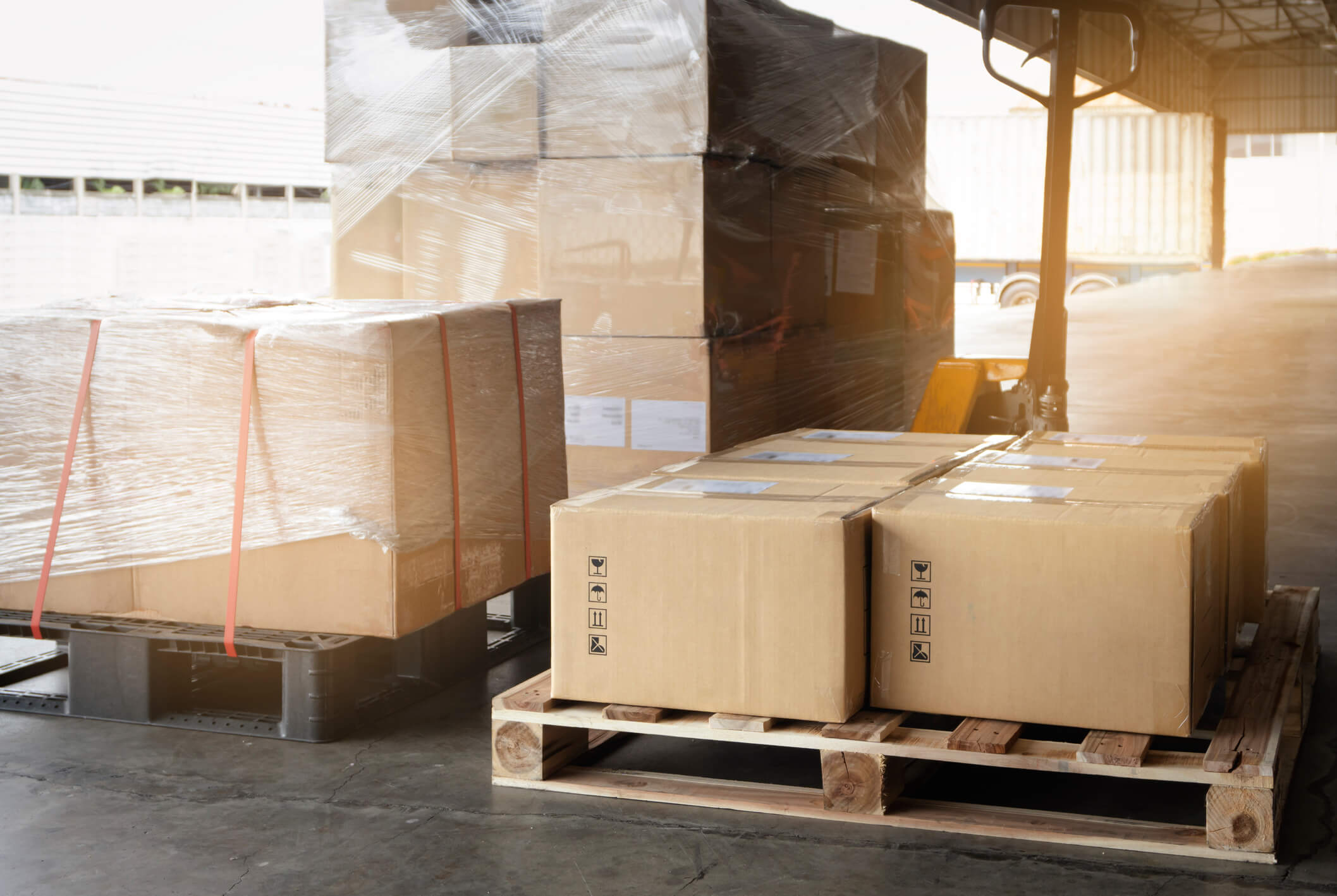
Poor palletization often causes damage, so follow this checklist to secure your cargo and prevent transit damage and lost inventory.
- Pallet selection: Use a standard 40-by-48 GMA without broken bottom boards or protruding nails.
- Stacking strategy: Stack boxes directly on top of each other for maximum strength, putting the heaviest boxes on the bottom.
- Overhand prevention: Make sure boxes do not stick out over the edge of the pallet to enforce strength and avoid damage.
- Wrapping and strapping: Shrink-wrap tightly, including the pallet base, and use straps to secure heavier loads to the pallet.
- Proper labeling: Place the bill of lading on at least two sides of the pallet, not just the top, which might get stacked on.
Technology and Other Integrations for E-Commerce Freight
Manually emailing multiple shippers to request quotes is too slow for modern e-commerce methods. The most successful brands adopt solutions that can integrate shipping data directly into their workflow. You can start by making a transportation management system the center of your logistics, allowing you to instantly compare multiple providers’ rates instead of checking individually.
Advanced operations can go even further by connecting shipping APIs directly to shopping carts, displaying accurate freight rates at checkout to prevent cart abandonment. Phoenix Logistics simplifies this with our live rating tool, which allows you to generate bookable quotes in seconds so you can see costs before committing to a shipment. These tools let your team focus on selling products instead of chasing tracking numbers.
Common Freight Shipping Mistakes Brands Make
Even the most experienced companies can make small errors that cut into their profits. You should steer clear of these pitfalls to keep your business running smoothly and cost-effectively.
- Underdeclaring weight and dimensions: The shipper will re-weigh your packages with a certified scale, which could result in extra fees and other billing adjustments that affect your margins.
- Choosing price over reliability: Often, using the cheapest provider results in higher damage rates or missed pickups, potentially leading to liability or loss of your customers’ trust.
- Ignoring reverse logistics: A lack of a return processing plan can lead to additional logistical issues.
How Can E-Commerce Brands Build a Long-Term Freight Strategy?
Working with a logistics-oriented partner typically means choosing between a shipper or broker. While selecting a single shipper may limit you to their specific assets and routes, a freight broker can give you access to an expansive network, ensuring you always receive the best combination of price and service without committing to a single provider’s limitations.
As your brand continues to grow, consider a strategy called zone skipping, which involves using multiple warehouses to position your inventory in hubs across different areas. This tactic lowers your average shipping costs and delivery times by reducing the distance each order must travel.
Turn Your Shipping Into a Competitive Advantage With Phoenix Logistics
Freight shipping doesn’t have to weigh down your growing e-commerce business. When managed properly, it can allow you to move more of your inventory for less money and keep your business-to-business partners and customers satisfied.
Hone your most proactive e-commerce freight solutions by partnering with Phoenix Logistics. We are a partner that integrates technical offerings such as volume consolidation and zone skipping with a personal approach. Our platform delivers the speed and efficiency your shipments need, while our dedicated team provides the strategic support you need to gracefully manage market fluctuations.
Fill out our contact form to request a no-obligation quote or call us at 317-926-8000to speak with one of our logistics experts to build a custom freight strategy tailored to your brand.